Contact
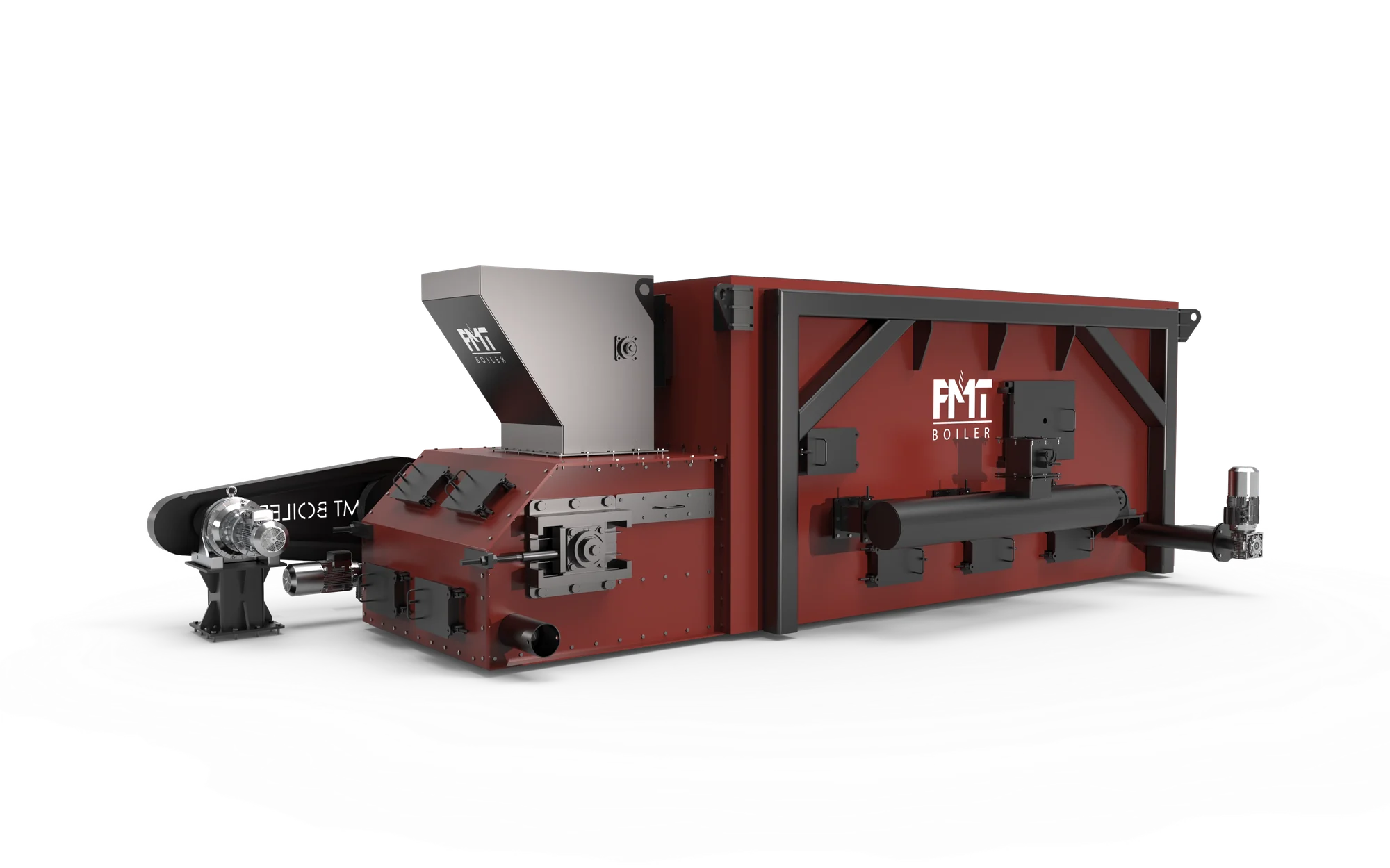
Chain (rotary, conveyor) grate combustion systems ensure the highly efficient, fully automatic combustion of solid/biomass fuels. Their compatibility with steam, hot water, superheated water and thermal oil boilers across a wide capacity range makes them a preferred choice for industrial facilities.
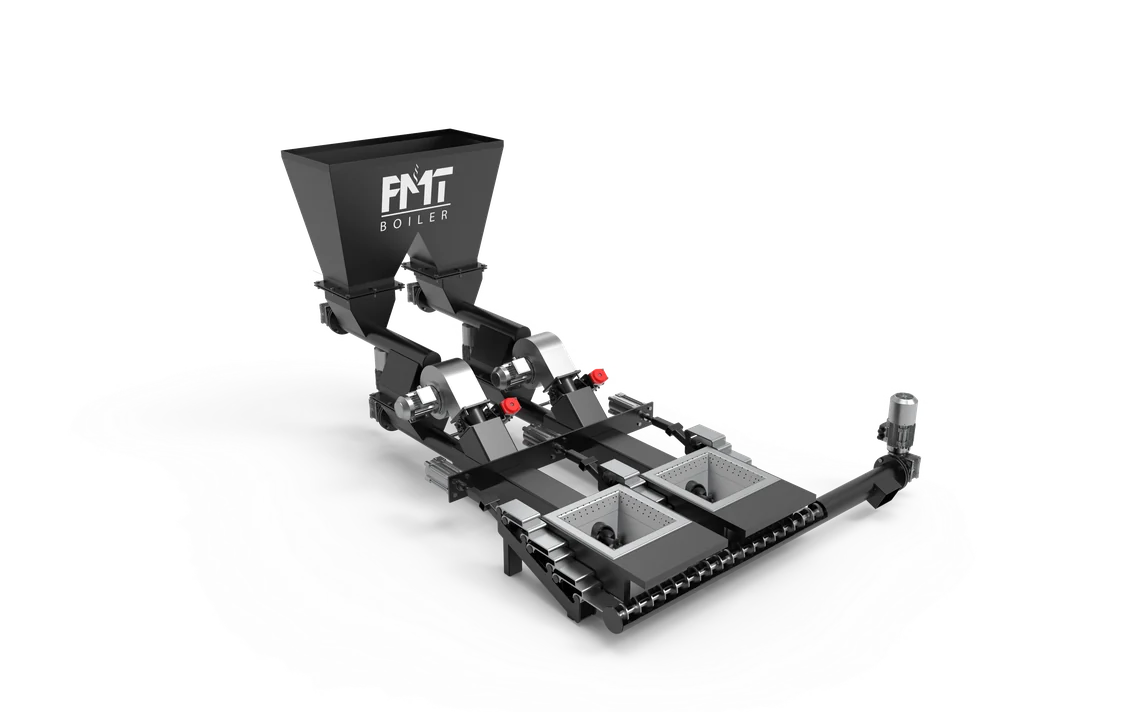
Fuel transferred from the main fuel storage silo to the fuel service hopper by a fully automatic feeding system is spread over the grate to the thickness set in advance using the fuel height gauge. At the beginning of the grate, with support from the radiation curtain, the fuel first releases its moisture. As the temperature rises, gasification causes it to release volatile hydrocarbons. These volatile hydrocarbons are efficiently combusted through secondary air injection. The combustion process is completed as the fuel moves along with the grate and its fixed-carbon content burns. The resulting ash falls into the grate’s ash hopper. The fully automatic ash removal system safely discharges ash and slag from the combustion system at timed intervals.
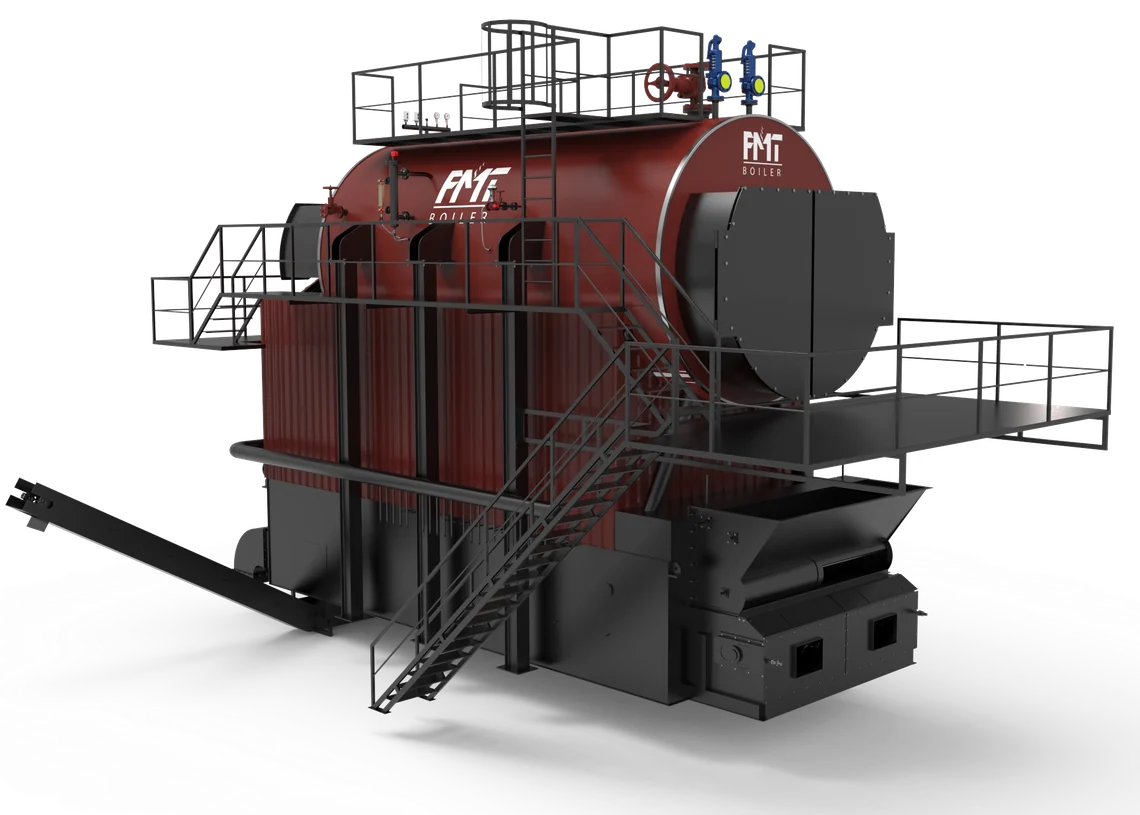
A rotary grate steam boiler is an industrial steam boiler that automatically burns solid fuels such as coal and biomass on a continuously moving chain grate. This combustion system is also known as a chain grate or conveyor grate. FMT Boiler’s CGS Series rotary grate combustion system is custom-designed for each project and can be used with steam, hot water, superheated water and thermal oil boilers. It can also be fitted to existing boilers.
Because the grate sections are away from the flame on the return run and are cooled by primary air, the risk of thermal deformation is low. The grate speed is adjusted to suit the fuel by a drive motor with a frequency inverter.
Rotary grate boilers are suitable for coal and biomass fuels. Economical solid fuels that are small-grained, low-calorific, low-density, or have high moisture or volatile content can be burned efficiently thanks to the large grate surface. Since the grate speed and fuel bed height can be adjusted, switching between different fuels is easy, helping secure your fuel supply.
Rotary grate steam boilers are used in industrial facilities that require a continuous, high-volume supply of steam or heat, particularly in the paper, food, textile, cement, chemical, pharmaceutical, glass, packaging, wood, automotive and energy industries.
Stoker systems feed fuel into the furnace from below. A rotary grate spreads fuel over a large surface and moves it forward, allowing low-calorific, moist and small-grained coal and biomass to be burned efficiently. For other options, see our UFS stoker combustion system and solid fuel steam boilers pages. For information on combustion zones, fuel selection and boiler selection considerations, read our article What Is a Rotary Grate Steam Boiler and How Does It Work?
The price depends on steam capacity, operating pressure, the fuel to be used, boiler type and auxiliary equipment such as fuel feeding, ash removal and flue gas treatment systems. Since each system is custom-designed for the project, you can get the most accurate price by using the quote form on this page.
Coal and biomass fuels can be used. The grate speed and fuel bed height are adjusted according to the fuel’s particle size, moisture content and calorific value.
Yes. The CGS rotary grate combustion system can be designed for installation on existing steam, superheated water and thermal oil boilers.
Yes. Rotary grate, chain grate and conveyor grate are different names for the same combustion system.
No. Hinged access doors and easily replaceable modular grate sections make maintenance and cleaning quick.
The chain grate system is designed for the effective use of fuels with different properties and combustion characteristics. To accommodate fuels with different burn rates, the grate speed can be adjusted via the grate drive motor, which is controlled by a frequency inverter. The chain grate system is also equipped with a fuel depth scale, as the height of the fuel layer spread across the grate must be adjusted according to various fuel parameters. This fuel flexibility helps you ensure the security of your fuel supply.
Special chrome-alloyed ductile iron grate sections, resistant to high temperatures and wear, provide years of trouble-free operation.
Thanks to its compact, level construction (compared with inclined grates), it reduces transportation costs and helps you reduce the size of the boiler room. This feature, which lowers construction costs, is one of the key advantages of the chain grate.
The standard screw-feed fuel system enables fully automatic operation, minimizing the need for human intervention.
The primary air supply system also enables the use of preheated combustion air via an optional recuperator. Using preheated combustion air is an important factor in ensuring thermal stability inside the furnace and increasing combustion efficiency.
The fully automatic ash removal system, featuring robust screw conveyor, shaft, motor and gearbox components, removes ash and slag and is supplied as standard with the chain grate. This keeps the need for human intervention to a minimum.
To ensure the optimum use of solid/biomass fuels, which have widely varying properties, the combustion system is designed specifically for your project, just like the boiler body. By optimally integrating the fuel, combustion system and boiler body, it is possible to achieve an environmentally friendly boiler system that is long-lasting, reliable and highly efficient.
Robust, long-lasting primary and secondary air fans supplied in directly coupled radial (centrifugal) designs deliver higher efficiency than fans driven by couplings or belt-and-pulley systems. This results in lower investment, operating and maintenance costs.
The compact, modular chain grate system is shipped factory-assembled. This helps minimize on-site installation time and costs. In addition, its design does not require a special concrete or steel support structure in the boiler room, so it can be easily installed on a level floor.
It is one of the best choices for efficiently burning economical solid/biomass fuels that require a large combustion chamber and grate surface and have characteristics such as relatively small particle size, low calorific value, low density, high moisture content and high volatile matter.
Since water-cooled grates with an external water circulation circuit do not incur the electricity consumption associated with pumps, the chain grate system offers more economical operation.
The automatic, on/off, spring-return dampers provided for the discharge lines of both primary and secondary air fans prevent problems such as flames and combustion continuing in the furnace and on the grate surface due to outside air being drawn in by natural draft when the boiler and combustion system shuts down, ensuring safe operation. The ash damper in the fully automatic ash removal system also prevents air from being drawn in during shutdown. While the system is running, it prevents excess air from entering through this point, which could disrupt combustion, reduce efficiency and cause undesirable emissions.
Combustion air inside the furnace is controlled precisely by driving the primary and secondary air fans with frequency inverters. Manual flow control dampers located on the fans’ suction side are also used to improve flow control.
The moving parts of the chain grate, such as the shaft and bearings, are not located in areas exposed to flames, so the risk of deformation is very low.
The distribution ducts for the primary combustion air supplied from beneath the grate are fitted with manual air dampers that allow the airflow to be adjusted separately for the drying, combustion and ash-cooling zones on the grate surface. This maximizes combustion efficiency.
After the fuel on the chain grate has burned, it falls off as ash. As the grate sections move from the upper to the lower section and then travel from back to front, they are not exposed to combustion and are cooled by the primary air. This cooling process ensures that the grate can operate reliably for many years.
The side walls of the chain grate are insulated with a special high-temperature-resistant castable refractory, while the area where fuel is fed onto the grate is insulated with an optimum amount of brick-type refractory (radiation baffle). These refractory applications help ensure thermal stability inside the furnace, achieve low emissions, shorten the time required for systems with intermittent operation to return to operating conditions, and support the evaporation of moisture in the fuel.
Primary air supply holes on specially designed grate sections maximise the oxidation required for fuel combustion, ensuring highly efficient combustion. This also helps reduce emissions and improve the carbon footprint.
Designed to be modular, optimally sized and easy to replace, the grate sections make potential replacements both cost-effective and quick.
Suitable for boilers used in industrial heating processes across many sectors, including paper, food, cement, textiles, oil, glass, chemicals, pharmaceuticals, healthcare, mining, energy, tires, rubber, packaging, automotive, wood, construction, and steel.
The specially designed lateral fuel guides located along the sides of the grate prevent fuel from falling off the sides into the area below, ensuring that the fuel fed onto the grate burns on its surface. This increases efficiency and prevents unwanted flames from forming beneath the grate. In addition, the tight clearance between these guides and the combustion wall improves airtightness. This limits potential air ingress through the sides of the grate, ensuring that combustion takes place on the grate surface.
Service doors in the appropriate number and specification, featuring specially hinged designs for effortless, safe and quick access, reduce the time boiler operators spend on maintenance and cleaning.
Your existing liquid- or gas-fired boiler systems can be converted to solid biomass-fired systems by adding a front furnace. This solution can also be applied to boiler systems equipped with solid biomass combustion systems of the same or a different type.
The grate surface and furnace temperature are controlled by an air-cooled grate cooled by primary air supplied in zones beneath the grate. This allows fuels with a low ash fusion temperature to burn completely and smoothly, without melting or forming slag. This prevents potential mechanical problems such as blocked air holes in the grate and jammed ash augers.
In water-cooled grate systems, where water circulates through the grate surface, the pipes and/or channels that provide circulation can become completely clogged depending on water quality, causing deformation. In addition, poor water circulation due to partial clogging can prevent the material surface from being cooled sufficiently, leading to unplanned shutdowns, production losses, and costly maintenance & repair expenses. With an air-cooled grate system, these types of clogging-related losses can be avoided.
The combustion system ensures efficient combustion, extending the intervals between cleaning of the heat-transfer surfaces (boiler tubes). In addition, the low emissions achieved through high-quality combustion play an important role in reducing the investment, operating and maintenance costs of any flue gas filtration system that may be required downstream of the boiler.
The Flame Backflow Detection and Fire Suppression System on the fully automatic fuel feed system minimizes the risk of a potential fire.
Level control and alarm sensors on the fuel service bunker monitor the amount of fuel inside the bunker and, when necessary, trigger alarms on the system panel to alert the boiler operator.

Send us your request for this product; our team will get back to you shortly.