Contact


In steam production systems, dissolved oxygen and carbon dioxide in the feedwater are highly corrosive gases that can negatively affect the long-term durability and efficiency of the system. To prevent these gases from entering the steam generator and causing corrosion, they need to be removed from the water and rendered harmless. Carbon dioxide is fully separated from the water at 65°C, while oxygen is fully separated at 102°C. The separated gases are vented through the top of the deaerator dome and discharged from the system.
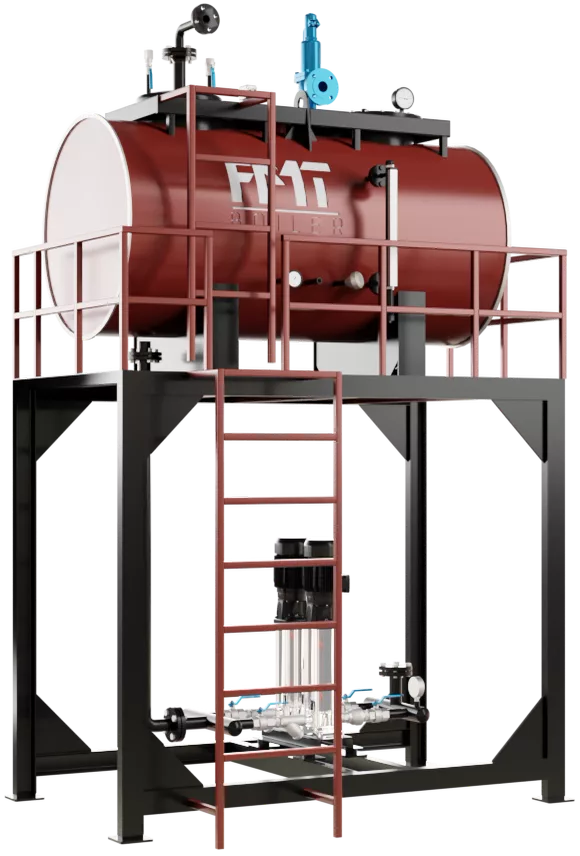
Thermal deaerators operate at a working temperature of 105°C. To prevent cavitation in the feedwater pump at this temperature, the deaerator must be positioned approximately 5 meters above ground level. This elevation creates positive pressure at the pump inlet, thereby preventing cavitation.
The Importance of Condensate Tank Temperature
If the temperature of the condensate tank rises to the range of 80-90°C due to the hot condensate coming from the processes, most of the carbon dioxide and a significant portion of the oxygen will already have been separated from the water. This reduces the energy and cost required for gas removal. The remaining small amount of oxygen can be captured using a low-cost method by dosing an oxygen scavenger chemical.
However, in facilities where condensate return is insufficient, and the condensate tank temperature is below 80°C, a large amount of oxygen scavenger chemicals may be needed. In such cases, the blowdown rate must be increased to prevent the water from exceeding its chemical capacity. Instead of this more costly method, thermal deaerators offer a more economical and sustainable solution.
Operating Principle of Thermal Deaerators
Thermal deaerators heat the feedwater by circulating the water from the condensate tank through separation plates and exposing it to steam within a tank operating at 0.2 barg pressure and 105°C. This process removes the dissolved gases from the water, minimizing the potential for corrosion. Thermal deaerators are recommended for facilities where the condensate tank temperature is below 80°C and there is a minimum of 7-8 meters of height available in the boiler room.
Advantages of Using Thermal Deaerators
Corrosion Prevention: Thermal deaerators effectively remove gases like oxygen and carbon dioxide from the water, minimizing the risk of corrosion, thereby extending the lifespan of steam boilers and piping.
Energy Efficiency: By increasing the temperature of the water, gases are removed more efficiently, leading to more effective steam production and energy savings.
Reduced Chemical Costs: In systems with adequate condensate return, the use of a small amount of oxygen scavenger chemicals reduces costs. Furthermore, lowering chemical consumption reduces the risk of exceeding the water's chemical capacity.
Sustainable Solution: By removing gases and preventing cavitation, the system operates safely and sustainably.
Conclusion
Thermal deaerators effectively remove dissolved gases from the water in steam systems, reducing the risk of corrosion and increasing system efficiency in industrial facilities. They stand out as an economical and environmentally friendly solution, particularly in facilities with insufficient condensate return and a need for high-temperature feedwater.
Send us your request for this product; our team will get back to you shortly.